
3D Printing Isn't Just for Prototypes Anymore
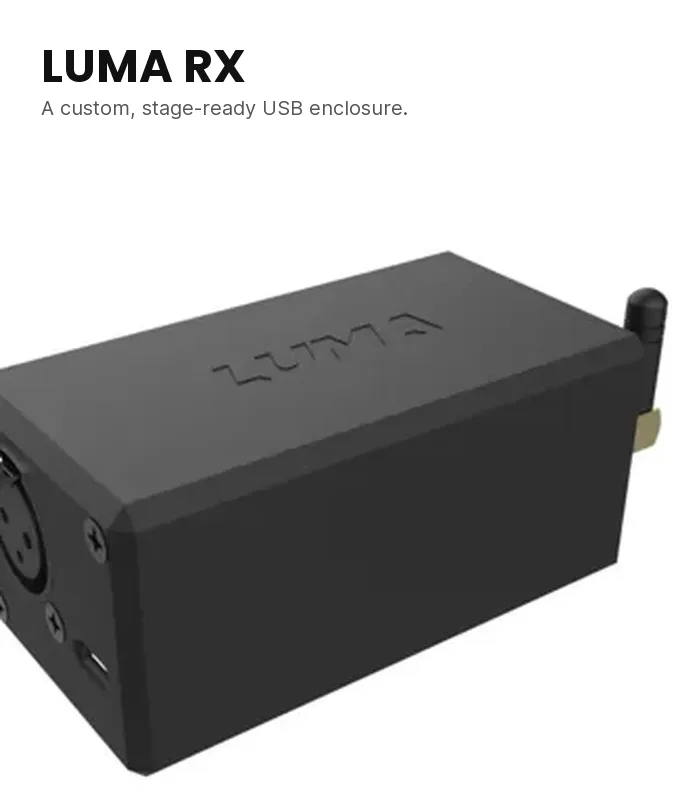
The default assumption is that 3D printing is a prototyping tool and injection molding or CNC machining is what happens once a product goes "real." That assumption is wrong often enough to be worth checking every time, because for the right geometry and the right volume, additive manufacturing is the production process, not a placeholder for one.
A production-run enclosure, built by SLA on purpose
Our LUMA RX project, a compact USB enclosure for an Italian DJ client, was optimized specifically for SLA 3D printing as its production method, not as a stand-in before some other process took over. The decision was made because SLA fit the client’s actual volume and let the enclosure hit a premium look and stage-ready durability without the cost or lead time of injection-molding tooling that low-volume production never would have paid back.
Multicolor and specialty filament as a finished product, not a test print
Our Vase Burner project, a decorative sleeve for a bukhoor stand, went through multicolor and silk-filament 3D printed prototyping and stayed a 3D-printed product through to the finished, market-ready piece, with surface finishing applied afterward for a smooth, glossy result. The organic, sculptural form and the low, steady volume the product needed made 3D printing the right production call, not just the right prototyping one.
When to actually consider 3D printing as production
Complex or organic geometry that would need an expensive single-purpose mold, volume that does not justify tooling investment, and a finish that can be achieved through post-processing are the three signals that additive manufacturing belongs in the production plan, not just the prototyping stage. Ruling it out automatically past the prototype phase means ruling out a production option that, for the right product, is both cheaper and faster.