
Inside a Real Box Build: A Wireless Scoring System
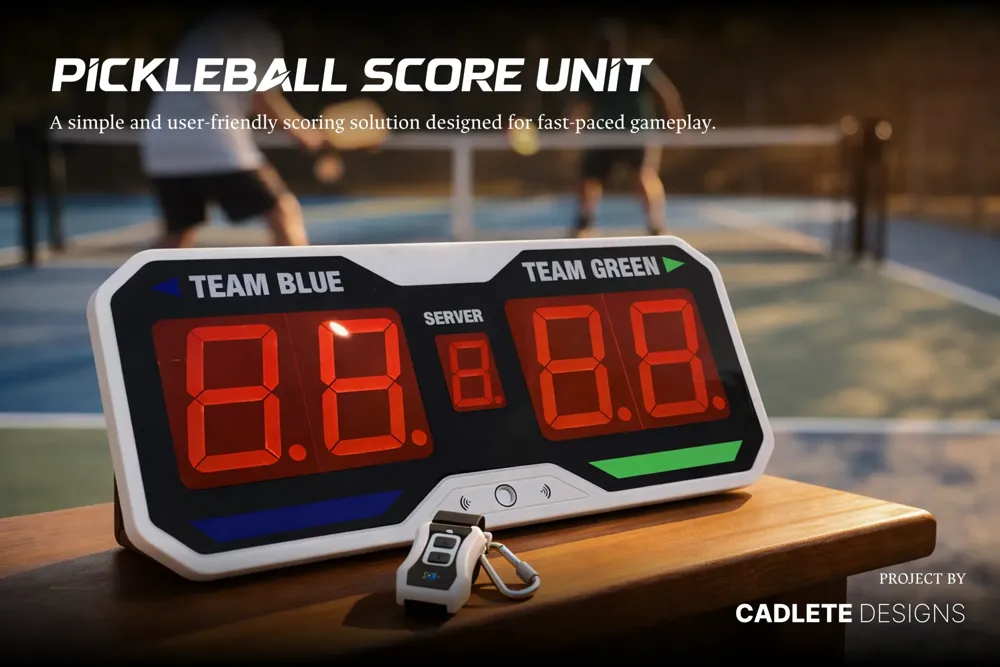
Our Pickleball Scoring System is the clearest proof we have that PCB design, firmware, and enclosure are one project, not three. A USA client needed a wall or net mounted scoring device to survive outdoor courts for years, not months, with wireless sync to a wristband. That brief only makes sense as a single, integrated box build.
One electronics platform, three mounting variants
The device had to work identically whether mounted on a fence, a post, or standing freestanding. That meant the industrial design work covered enclosure form and mounting interfaces for all three variants around one shared electronics architecture, not three separate products that happened to share a PCB.
PCB, firmware, and wireless sync engineered together
Board layout and the firmware running the scoring logic were built alongside the power, display, and wireless system design, because a wristband sync that works in a quiet test room and drops the connection with multiple courts running side by side outdoors is a failed product, not a shipped one. That reliability requirement had to be designed in from the electronics architecture stage, not tuned in after the fact.
Validated as a whole, not in pieces
An MVP prototype was tested on an actual court, not just on a bench, because direct sun, rain, and temperature swings are part of the product’s real operating environment. Box build assembly means every one of these pieces, mechanical enclosure, PCB, firmware, and wireless sync, gets validated together as the finished unit, not signed off separately and hoped into working once assembled.