
From 50 Units to 5,000 Without Re-Tooling
A first production run validates that people want the product. What comes next, scaling from a few hundred units to a few thousand or more, should not mean throwing out the tooling and starting over with a new vendor. Whether that is possible depends entirely on decisions made before the first mold was ever cut.
A zero-undercut mold is a scaling decision, not just a cost one
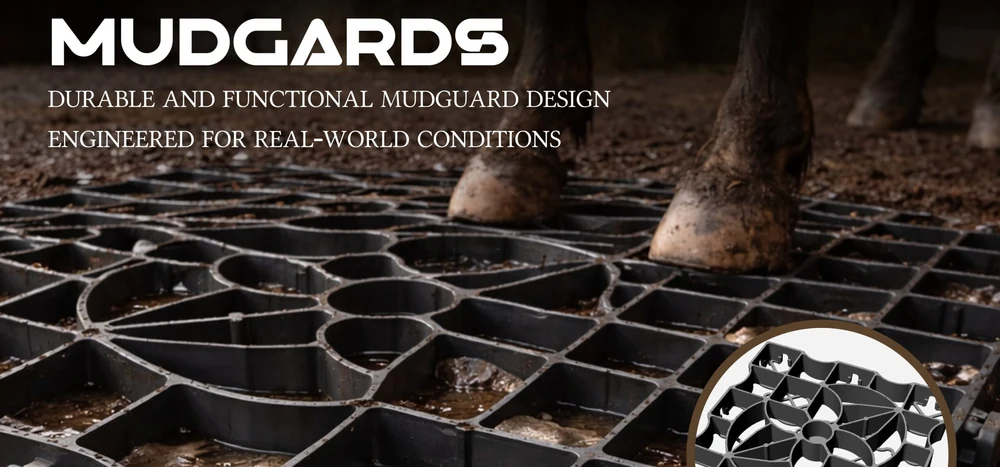
Our Mudgards project turned a generic ground reinforcement grid into a branded, injection-molded product for a USA equestrian brand, and has since shipped over 30,000 units. The zero-undercut design that kept the original mold cost-effective is the same design choice that let the part keep running at volume without a tooling redesign: an interlocking, load-bearing grid at 700 to 800 grams that had to produce consistent quality run after run, not just on the first thousand units.
Building variant tooling that scales with the product line
Our Rotating Wheel Center Caps project scaled from a single custom idea into a full product line and startup launch, with a snap-fit mounting system engineered across six different wheel diameter variants from the outset, plus supply chain, packaging, and e-commerce assets built around it. Designing for six variants at the tooling stage, instead of adding variants one at a time after launch, is what let the product line grow without each new size becoming its own re-tooling project.
What actually enables the jump
In both projects, the common thread is that decisions made at the first tooling stage, mold geometry that avoids undercuts, and variant planning built into the original tool family, are what determine whether growth from 50 units to 5,000 is a straightforward reorder or a second product-development cycle. Scaling without re-tooling is a design decision made early, not a manufacturing favor granted later.