
What a Box Build Actually Means
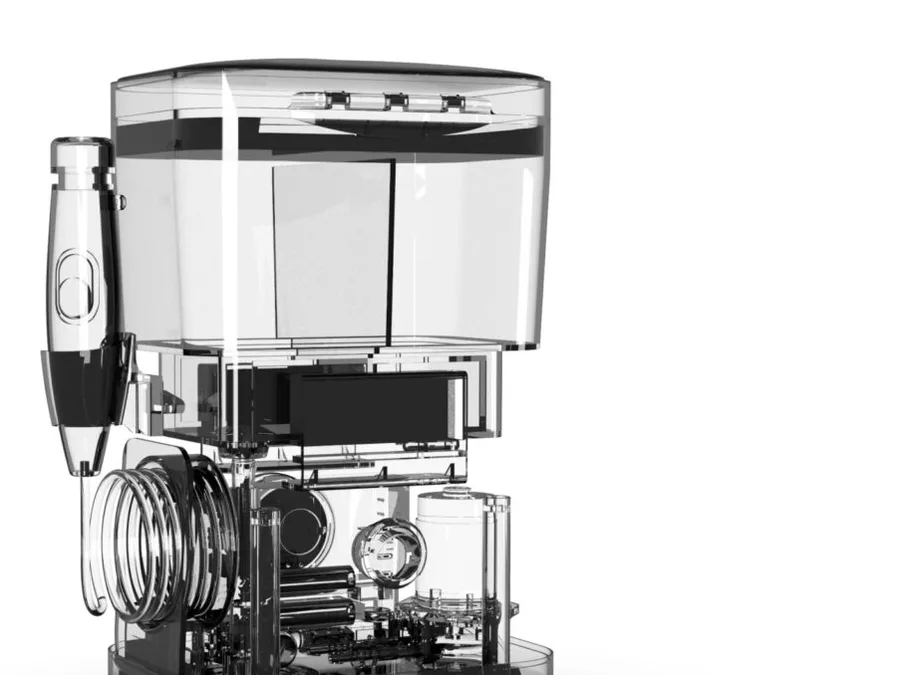
A box build is not a PCB, and it is not an enclosure. It is PCB, enclosure, wiring and harnessing, mechanical assembly, and final functional test, delivered as one complete, ready-to-ship unit. Most vendors can do one or two of those steps well. Very few can carry all of them under one roof, which is exactly why box build assembly usually ends up as three separate vendor relationships a founder has to manage by hand.
What "one finished unit" actually requires
Our Water Flosser project makes the coordination problem concrete: the final assembly involved over 15 interlocking mechanical and electronic parts, all seating correctly around a custom PCB that controlled a heating element and a dual-liquid system. A proof-of-concept build validated the electronics and heating performance before the mold-ready housing file was even finalized, because the housing geometry could not be locked until the board and its components were.
Where split vendors actually fail
Split a project like that across a PCB house, a mold shop, and an assembly line with no single owner, and the parts that seat together on a board and a fitment tolerance sheet are exactly what falls through the gap. Nobody owns the moment the PCB and the housing have to fit together, because that moment sits between two vendors, not inside either one.
What to check before committing to a box build vendor
Ask whether the same team that designs the PCB also owns the enclosure fit, whether wiring and harnessing are built in-house or sub-contracted out, and whether final functional test happens before the unit ships or gets treated as the customer’s problem to discover. A real box build vendor answers all three the same way: yes, in-house, before it ships.