
Die Casting vs CNC Machining: Picking the Right Process
Die casting and CNC machining solve overlapping problems in metal parts, but the decision between them comes down to volume, tooling investment, and how much the part’s geometry has to be reworked to fit each process. Getting it wrong in either direction means paying for a tool the volume never justified, or paying a per-unit machining premium a mold would have eliminated.
Die casting: volume and finish, at a tooling cost
Our Horse-Shaped Handle project used zinc die casting to produce a sculptural, premium-market handle at production volume, with a finish quality that plates evenly across a complex curved surface. Die casting made sense here because the design needed to be reproduced at real volume with a consistent finish across intricate geometry, a combination that justifies the upfront cost of a die.
CNC machining: precision and flexibility, without a mold
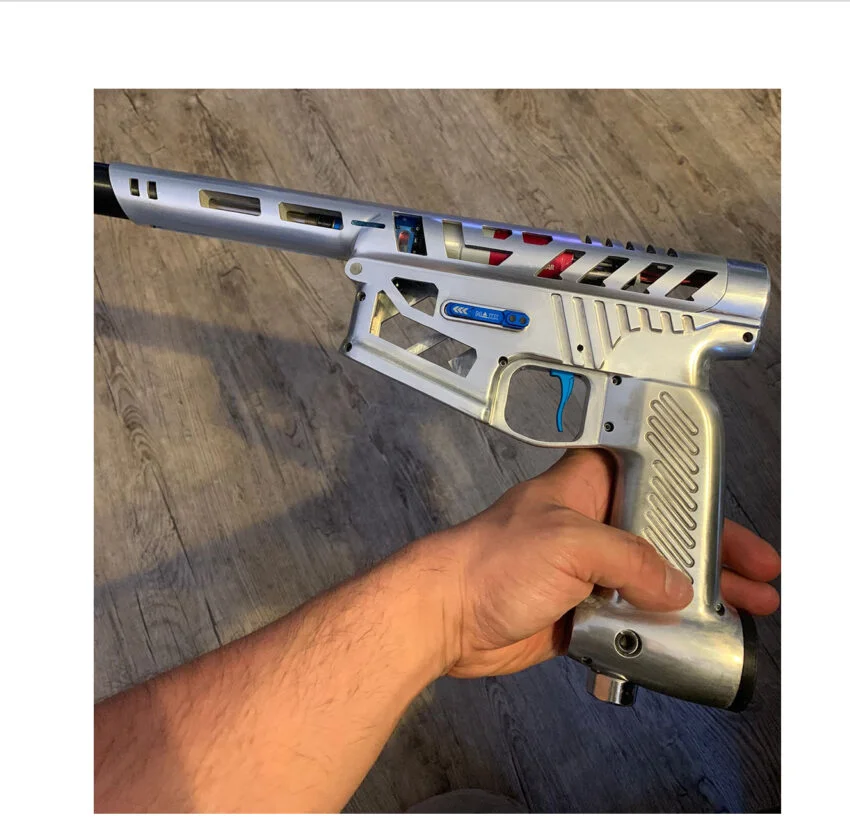
Our Airsoft Gun Housing project moved from a 3D-printed design to CNC-machined aluminum specifically to validate precision, fitment, and performance under realistic handling conditions, without committing to die-casting tooling first. CNC let the team re-engineer the design for proper tool paths and tolerances, reduce weight through structural analysis, and iterate on the geometry across several machined prototypes, changes that would each require a new die if the part had gone straight to casting.
How to actually decide
If the geometry is stable, the volume is high, and finish across complex curves matters, die casting’s tooling cost pays for itself. If the design is still likely to change, the volume does not yet justify a die, or tight tolerances and rapid iteration matter more than raw unit cost, CNC machining is the right call, exactly the sequence the Airsoft Gun Housing project followed before any tooling decision was made.