
When to Move From 3D Printing to Injection Molding
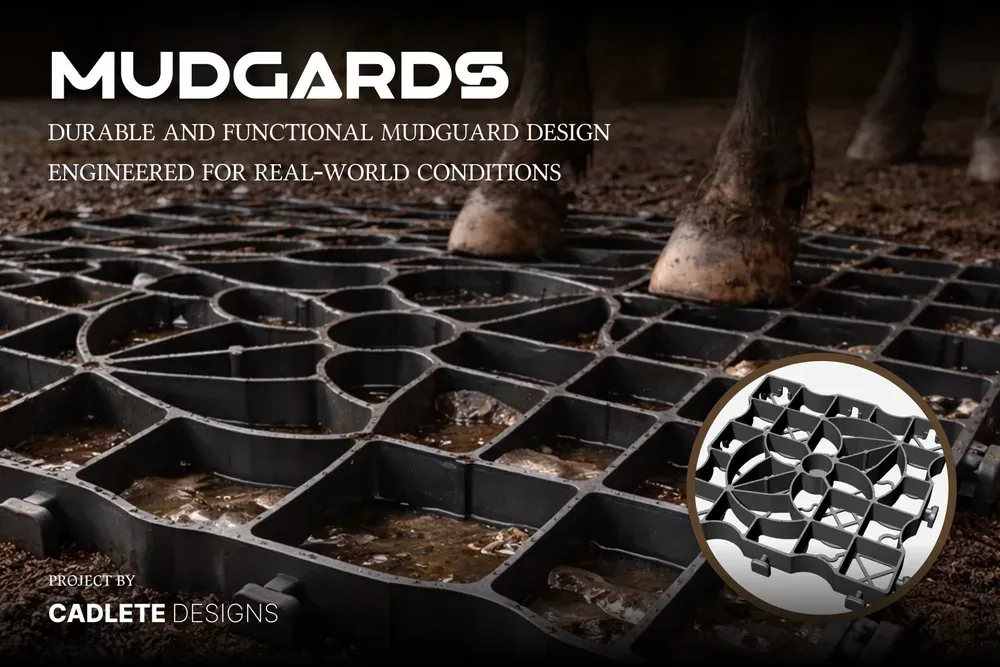
The question is never "3D printing or injection molding." It is "at what volume does an upfront tooling cost stop being a risk and start being a discount." Get that crossover point wrong in either direction and you either pay for a mold you did not need, or you spend months hand-finishing print jobs that should have been molded a hundred units ago.
When 3D printing is still the right call
Our Vase Burner project, a decorative sleeve for a bukhoor stand, went through multicolor and silk-filament 3D printed prototyping to test form and finish, then stayed a 3D-printed product in production. Low, unpredictable volume and a complex organic form that would need an expensive, single-purpose mold made tooling a poor trade against printing at the volume the product actually needed.
When the volume math flips
Our Mudgards project shipped over 30,000 units of a branded, injection-molded ground reinforcement grid to a USA equestrian brand. At that volume, a zero-undercut mold design kept tooling cost-effective while still delivering an interlocking, load-bearing part at 700 to 800 grams, run after run, at a per-unit cost no printer could match. Our Dual Bottle project was engineered manufacture-ready for injection molding from the start for the same reason: a two-part, leak-proof compartment system meant for daily, ongoing use, not a one-off run.
The real question to ask before deciding
Ask three things before committing either way: what is the realistic unit volume over the product’s life, does the geometry include undercuts or thin sections a mold would need redesigned around, and does the part need injection molding’s consistency for a leak-proof seal or load-bearing joint. Answer those honestly and the crossover point stops being a guess.