
FCC-, CE- Und RoHS-Zertifizierung Für Hardware-Startups: Was Wirklich Nötig Ist Und Wann
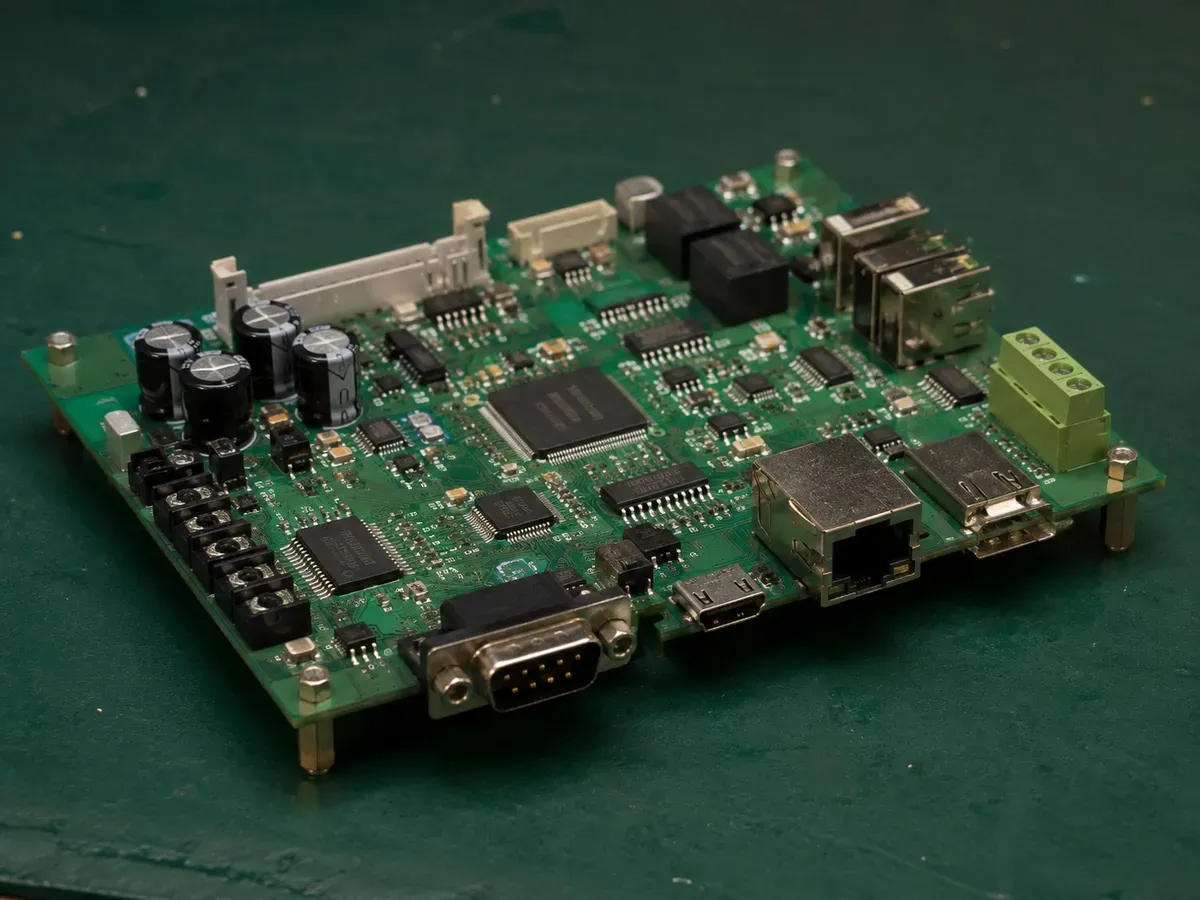
A wireless product passed every functional test its engineering team could throw at it. Worked at range. Worked on battery. Worked reliably, week after week, on the bench. Then it went to a certification lab for FCC testing and failed radiated emissions by a wide margin, because the ground plane layout that was fine on a single prototype board became, at the antenna frequency, effectively a small unintentional radiator.
That failure cost real money and a real delay. It also could have been caught for close to nothing, months earlier, with a layout choice that had nothing to do with functionality and everything to do with what a compliance test actually measures.
This is the pattern behind most certification surprises: the product works. The failure isn’t functional, it’s regulatory, and it shows up late, expensive, and on a deadline, because certification planning happened after the design was already locked instead of alongside it. This guide is what to actually plan for, by market, before that happens.
Why Certification Catches Hardware Founders Off Guard
Three things make this a recurring surprise rather than a one-off mistake: certification requirements differ by target market, not just by product type, so "we got CE" doesn’t mean you’re clear for the US or Australia; the requirements interact with layout and component choices made early in the design, long before anyone is thinking about a test lab; and the cost and timeline gap between a pre-certified wireless module and a custom radio design is large enough to genuinely change a project’s budget and schedule, but is rarely explained clearly up front.
FCC (USA): Class A vs. Class B, Intentional vs. Unintentional Radiators
In the US, FCC Part 15 governs both unintentional radiators (any digital device, whether or not it has a radio: the clock and switching noise from ordinary digital circuitry counts) and intentional radiators (anything that deliberately transmits, like BLE, WiFi, or LoRa radios).
Class A covers commercial/industrial-use equipment with a more permissive emissions limit; Class B covers residential/consumer-use equipment with a stricter limit, because it assumes the product will operate closer to other electronics and to people. Most consumer hardware products need to meet Class B, which is the harder bar to clear, not the easier one. A common and costly misunderstanding is assuming the less strict Class A limit applies by default.
CE Marking (EU/UK): What It Actually Covers Beyond RF
CE marking in the EU (and the closely related UKCA marking for the UK, post-Brexit) is not a single test. It’s a declaration that a product meets several distinct directives at once: the Radio Equipment Directive (RED) for anything with a radio, the EMC Directive for electromagnetic compatibility, the Low Voltage Directive for anything mains-connected, and RoHS for restricted hazardous substances in materials and components.
A common mistake is treating "CE" as one checkbox. In practice it’s a bundle of separate technical requirements, and a product needs to actually satisfy each relevant directive, not just claim compliance with the mark.
IC, RCM, and IMDA: The Other Markets You’re Probably Shipping To
If your product sells into more than one country, plan for more than one certification regime from the start, not as an afterthought once FCC or CE is done.
- IC (Canada): Industry Canada certification, closely related to FCC in structure but a genuinely separate filing and test, not a rubber-stamp extension of an FCC pass.
- RCM (Australia): Regulatory Compliance Mark, covering EMC and, for radio products, radiocommunications compliance: required for legal sale in Australia regardless of FCC or CE status elsewhere.
- IMDA (Singapore): Infocomm Media Development Authority certification for radio and telecom equipment sold in Singapore, a distinct regime from either the US or EU frameworks.
The practical implication: a product genuinely shipping to USA, EU/UK, Canada, Australia, and Singapore needs five separate certification paths considered, not one. Using a pre-certified radio module that already carries multiple regional certifications (see below) is the single biggest lever for making this list manageable rather than overwhelming.
RoHS and Environmental Compliance: The Quiet Requirement
RoHS (Restriction of Hazardous Substances) restricts lead, mercury, cadmium, and several other substances in electronic products sold into the EU, and several other markets now have RoHS-equivalent requirements of their own. Unlike RF certification, this isn’t about lab testing your finished product: it’s about component and material selection, and supplier documentation, earlier in the process.
The practical fix is choosing RoHS-compliant components from the start and keeping supplier compliance documentation on file, rather than discovering a non-compliant component after a BOM is finalized.
Real Certification Cost Ranges by Market (2026 Industry Data)
The figures below come from current industry certification-cost guides, not a CADLETE quote, since actual pricing always depends on your specific product and chosen lab. They’re useful as a planning range before you request real quotes.
Typical Certification Cost Ranges
| Market | Certification | Typical Cost Range |
|---|---|---|
| USA | FCC, simple digital device | $1,500 to $5,000 |
| USA | FCC, pre-certified WiFi/BLE module path | $3,000 to $10,000 |
| USA | FCC, custom RF design | $18,000 to $58,000+ |
| UK | UKCA, incremental to an existing CE test program | $300 to $900 |
| EU / Germany | CE, self-certified, non-wireless | €400 to €1,500 |
| EU / Germany | CE, wireless, under RED | €1,500 to €3,000+ |
| EU / Germany | CE, Notified Body required | €13,000+ |
| Australia | RCM | $1,000 to $3,000 |
| Canada | IC / ISED | $1,000 to $2,500 |
A real multi-market example puts this in perspective: a simple Bluetooth-connected consumer product entering the USA, EU, and UK together, using a pre-certified wireless module, commonly totals somewhere around $4,300 to $7,100 across all three certifications combined, before adding Australia, Japan, or Korea on top. That total looks intimidating written as one number and genuinely manageable once it’s broken into the module-based path most startups should be taking anyway.
Pre-Certified Module vs. Custom Radio Design: Cost and Timeline Tradeoff
This is the single highest-leverage decision in the whole certification picture. A custom radio design, tested and certified from scratch, is a real, substantial cost and a multi-month timeline commonly cited in the tens of thousands of dollars and eight to sixteen weeks, depending on complexity and how many regions are involved.
A pre-certified wireless module (a BLE, WiFi, or cellular module that already carries FCC, CE, IC, and similar certifications from its manufacturer) shifts most of that RF-specific certification burden onto the module vendor. Using one commonly reduces the remaining certification scope for the finished product to a much smaller, faster process, often a small fraction of the custom-radio cost and timeline, because you’re certifying the host product’s emissions and how you’ve integrated the module, not re-certifying the radio itself.
The tradeoff: a pre-certified module has to be integrated per its manufacturer’s specific guidelines (antenna placement, ground plane, keep-out zones) to keep its certification valid. Deviate from those guidelines and you may lose the module’s existing certification coverage and be back to a fuller test cycle.
Designing for Certification From Day One
The layout choices that make the difference between a first-pass and a failed test are decided early, usually before anyone is thinking about certification at all:
- Keep clock and high-speed traces short, and route them on inner layers between ground planes where possible
- Use a continuous ground plane with no unnecessary splits: a split ground plane is a common, quiet cause of radiated-emissions failures
- Place decoupling capacitors within a few millimeters of IC power pins, not "somewhere on the board"
- Follow the wireless module manufacturer’s reference layout exactly if using a pre-certified module: deviations here are what void the module’s existing certification
- Run pre-compliance testing with a near-field probe or an accredited pre-scan during the prototype phase, before the design is locked, not after
Real Example: A Certification Test That Failed and Why
This is a pattern we watch for specifically because we’ve seen its cost up close: a board with an unsplit-looking but functionally noisy ground plane, where digital switching noise coupled into a shared ground path and, at the specific frequency the antenna operated on, turned an otherwise ordinary digital signal into a measurable unintentional emission.
The fix, once caught, is usually a layout change (a proper star-ground topology separating noisy and quiet returns), not a component change, which is exactly why catching it during design review, or during pre-compliance testing with a near-field probe before the official test, is so much cheaper than catching it at the certification lab. A failed official test isn’t just a re-test fee; it’s a full retest cycle on a compressed schedule, sometimes with a board respin in between.
PCB layout that passes certification the first time
CADLETE designs PCB layouts with EMI and certification requirements built in from the schematic stage, not added afterward, and can recommend a pre-certified module path when it genuinely fits your product’s range and integration needs.
Choosing a Certification Lab: What to Ask Before You Book
Not every accredited lab is equally useful to a first-time hardware team, and the questions worth asking go beyond price and turnaround time.
- Is the lab accredited for the specific standards your product needs (not just "FCC testing" broadly, but the specific Part 15 subpart, or the specific EN standard under RED), since a mismatch here can mean a report that doesn’t actually satisfy the filing requirement
- Can they run a pre-compliance scan before the formal test, and is that scan priced separately or bundled, since this is the cheapest insurance against a failed official test
- What is their real average turnaround time, not the marketing number, and does that change during their busy season
- Do they support the specific regions you need (a lab well set up for FCC isn’t automatically positioned to file UKCA or RCM paperwork), or will you need a second lab relationship for other markets
- What happens, concretely, if your first pass fails: is a re-test discounted, and how much schedule does it realistically add
Common First-Time Certification Mistakes Beyond Layout
Layout is the most technically interesting failure mode, but it isn’t the only one, and the others are just as expensive to catch late.
Testing with non-final firmware is a common, avoidable mistake: a firmware update after certification that changes RF timing, duty cycle, or power output can technically invalidate the certification that was already paid for, since the test was performed against a specific configuration, not the product in general.
Forgetting that the EMC test boundary includes cables and accessories, not just the main unit, catches teams off guard: a charging cable, an external antenna, or a companion accessory sold in the box is part of what gets tested, and a last-minute accessory swap after a test has passed can require a re-test.
Changing enclosure material or adding a metal component after certification is another quiet trap: the enclosure was part of the tested configuration, and a material change, especially one that adds or removes shielding, can change the emissions profile enough to need a re-test even when nothing electronic changed at all.
Realistic Certification Timeline Across a Product’s Development Schedule
Certification isn’t a single milestone at the end: it has two real touchpoints. Pre-compliance testing should happen during the prototype/functional-validation phase, early enough that a layout fix is still cheap. Formal certification testing happens once the design is genuinely locked, because any post-certification design change (even one that looks minor) can require a re-test.
For a pre-certified-module product, budget certification as a relatively short, predictable step late in the schedule. For a custom radio design, budget it as its own multi-month phase, run in parallel with other production-readiness work rather than sequentially after everything else, since it’s frequently the longest single lead-time item in the whole project.
What Actually Happens on a Certification Test Day
It helps to know what the process actually looks like once a product arrives at the lab, rather than treating certification as an opaque black box that returns a pass or fail.
Most labs start with a pre-scan or engineering evaluation, an informal run using the same equipment as the formal test, to flag any obvious problem before the clock starts on the official, billable test run. This is exactly why booking pre-compliance testing during the prototype phase (see above) is so valuable, since it’s the same kind of check, just earlier and cheaper.
The formal test itself runs the product through a defined set of operating conditions and measures emissions or immunity against the specific limit for its device class, in a shielded chamber for radiated tests or on a bench with specific coupling equipment for conducted tests, depending on which requirement is being verified.
Turnaround on the formal report typically runs from a few days to a couple of weeks depending on the lab’s queue and how many standards are being tested at once. A failed result comes with specific data showing where and by how much the product exceeded the limit, which is what a layout engineer needs to actually fix the problem rather than guess at it.
Building Certification Cost Into Your Budget
Certification is one of the most commonly under-budgeted line items in early hardware cost estimates, alongside the tooling cliff covered in our hardware product cost guide. Treat it as its own explicit line item, module-based or custom-radio, by target market, rather than folding it into a generic "engineering" estimate, and you’ll avoid one of the most common budget surprises in the entire process.
Sequencing Certification Across Multiple Markets
FCC and CE share a meaningful amount of underlying test infrastructure (EMC and radiated-emissions testing overlaps significantly between the two), so a properly sequenced multi-market certification program can often deliver FCC, CE, and UKCA together in roughly 12 to 16 weeks rather than running each as a fully separate project end to end.
The practical sequencing that saves the most money: run FCC and CE testing in parallel at the same lab where possible, since the underlying test data overlaps; add UKCA as the smaller incremental step it actually is, since the same UK-based Approved Body review can often reuse the CE technical file rather than starting fresh; then treat RCM (Australia), IC (Canada), and IMDA (Singapore) as smaller, later additions once the core USA and EU/UK markets are locked, since none of the three require re-running the core RF and safety tests from scratch.
The mistake to avoid: treating each market as a fully separate, sequential project, which multiplies both cost and calendar time by re-testing things that didn’t need re-testing.
Frequently Asked Questions
Do I need to certify for every country I plan to sell into before launch?
You need certification for every country where the product will legally be sold or distributed, before it ships there. It’s common to launch in one primary market first and add other regional certifications as expansion happens, as long as you aren’t shipping into a market before its certification is complete.
How much faster is certification with a pre-certified module versus a custom radio design?
Substantially faster in most cases: a pre-certified module shifts the RF-specific certification burden to the module vendor, often reducing the remaining process to a small fraction of a custom radio design’s multi-month timeline, provided the module is integrated exactly per its manufacturer’s reference guidelines.
Is RoHS compliance something I test for, like FCC or CE?
No. RoHS is a materials and component compliance requirement, verified through supplier documentation and component selection, not a lab test on the finished product. It needs to be planned for during BOM creation, not at certification time.
What happens if my product fails a certification test?
You get a report identifying what failed and by how much, then typically need a design fix (often a layout change) and a re-test, on your own schedule and budget. This is exactly why pre-compliance testing during the prototype phase exists: it’s much cheaper to fail informally, early, than officially, late.
Does a wired-only product (no wireless radio) still need certification?
Yes, generally: most digital electronic devices, wireless or not, fall under unintentional-radiator emissions requirements (FCC Part 15 in the US, the EMC Directive in the EU) simply from normal digital circuit operation. Wireless adds intentional-radiator requirements on top, it doesn’t replace the baseline requirement.
Can I self-certify, or do I always need a Notified Body?
For most non-wireless, non-safety-critical consumer electronics, self-certification with your own or a lab’s test data is standard and meaningfully cheaper. A Notified Body becomes necessary for specific higher-risk product categories under EU rules, which is exactly why that path costs €13,000 or more. Confirm which category your product falls into early, since it changes the whole budget.
Does a battery need its own separate certification?
Yes. Lithium batteries specifically require UN38.3 transport testing, separate from FCC, CE, or RoHS, and this is a commonly missed line item in early certification budgets, typically adding a real but comparatively small cost on top of the RF/EMC certifications above.
What is the cheapest realistic path to certifying for five markets at once?
Use a pre-certified wireless module, run FCC and CE together at one lab given the test overlap, add UKCA as the small incremental step it is, then add RCM and IC as smaller regional additions. This sequencing, not any single cheaper lab, is what actually controls the total cost across five markets.
Documentation to Keep After Certification
Passing a test isn’t the end of the paper trail, and keeping the right documentation organized matters both for future design changes and for a potential regulatory audit.
Keep the full test report, not just the certificate summary, since it contains the specific configuration, firmware version, and antenna details the certification actually covers. Keep the technical construction file for CE (design drawings, risk assessment, declaration of conformity) together in one place, since it’s the document a market-surveillance authority would ask to see, not just the CE mark itself.
Any subsequent design change, even one that feels minor, should be checked against this file before shipping, specifically to answer whether it falls inside the tested configuration or would require a new test. This single habit is what prevents the "we changed one component and didn’t realize it mattered" scenario from becoming a real compliance gap discovered after product is already in the field.
Additional Questions
How long is a certification valid before it needs to be renewed?
Most FCC and CE certifications don’t expire on a fixed schedule the way a driver’s license does, but they’re tied to a specific, documented product configuration. A meaningful hardware or firmware change effectively invalidates the certification for that changed configuration, which functions like a renewal requirement even without a calendar deadline attached.
Who is actually responsible if a certified product is later found non-compliant?
Legal responsibility generally sits with the entity placing the product on the market (often the brand, not the contract manufacturer), which is exactly why keeping the full documentation trail described above matters: it’s the evidence that due diligence was genuinely done, not just claimed.
Should certification planning start before or after choosing a manufacturing partner?
Before, ideally at the same time as the wireless protocol and module decision. A manufacturing partner who understands certification requirements can flag layout and component risks during DFM review rather than after a test failure, which is exactly the kind of design-stage catch this whole guide is built around.
Summary: Key Takeaways
- Certification requirements are market-specific, not product-type-specific: FCC, CE, IC, RCM, and IMDA are five separate regimes: plan for all the markets you’ll actually ship to.
- The pre-certified module vs. custom radio decision is the single biggest cost and timeline lever: A module can cut both dramatically, if integrated exactly to its manufacturer’s reference layout.
- RoHS is a component-selection requirement, not a lab test: Plan it into your BOM, not your certification test schedule.
- Design for certification during layout, not after: Ground plane topology, decoupling placement, and trace routing are the choices that determine a first-pass versus a failed test.
- Run pre-compliance testing before the design is locked: Catching an EMI issue during the prototype phase is a layout fix. Catching it at the certification lab is a delay and a re-test.
The team from the opening story eventually passed, on the second attempt, after a ground-plane redesign that could have happened months earlier for a fraction of the cost. Certification isn’t the hard part of hardware. Treating it as a late-stage checkbox instead of a design input is, and the fix is almost always cheaper and earlier than it first looks once someone actually plans for it.