
Lemur DIY Hologram STEM Kit: From First Concept to Scalable EdTech Product
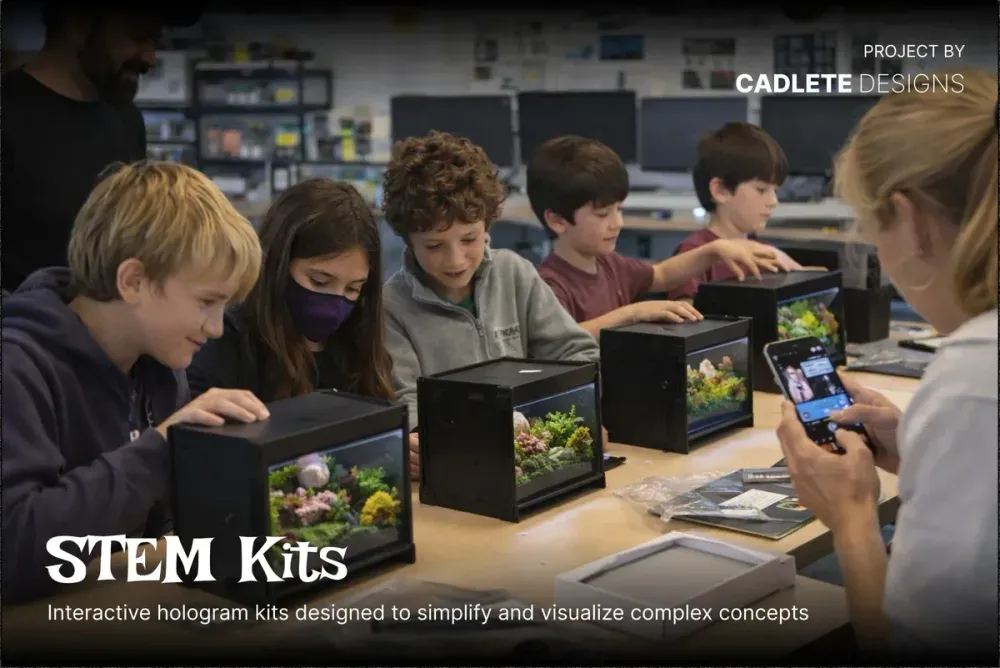
A kit that lets students build their own hologram
Our client, a USA-based educational product company, wanted a DIY STEM kit that lets students explore and interact with 3D holographic visuals, assembled by the students themselves.
The project evolved through two product generations, Lemur 1.0 and Lemur 2.0, moving from a working first version to a lighter, more refined product that could scale into classrooms.
What made this project hard
Complexity vs. usability
Simple enough for student assembly, while still delivering a meaningful hologram experience.
Material selection at scale
Durability and cost-effectiveness needed for bulk classroom production.
Weight and refinement
Version 1.0’s limitations meant Version 2.0 needed significant weight reduction without losing structural integrity.
Manufacturing compatibility
Every change had to stay compatible with laser-cutting processes.
From Lemur 1.0 to a scalable Lemur 2.0
Two product generations, one team, no handoffs between them.
Lemur 1.0 Development
A functional kit built from textured MDF, optimized for laser cutting.
Material Research
Material options investigated for weight reduction and cost.
Lemur 2.0 Refinement
Form, finish, and visual appeal refined while cutting weight.
Iterative Validation
Prototyping and testing confirmed manufacturing compatibility.
Lemur 1.0: a complete kit built for laser cutting
The first version transformed the concept into a functional kit using textured MDF materials optimized for laser cutting, including complete components, packaging, and assembly support.
The focus was easy assembly, durability, and cost-effectiveness for a first classroom rollout.
Material research for a lighter Version 2.0
Material research and optimization work targeted the biggest limitation of Version 1.0: weight, while keeping the kit affordable to produce in bulk.
Refining form and finish without losing manufacturability
Form, finish, and visual appeal were refined for Lemur 2.0, with every change checked against laser-cutting compatibility so production did not have to change tooling.
Iterative prototyping through two generations
Iterative prototyping and validation across both generations resulted in over 4,000 units produced and shipped to the USA, now in active classroom use across schools.
What shipped
"Two successful product generations, now in active classroom use across US schools."
Questions We Hear About This Project
Why ship a Version 1.0 instead of waiting to launch a more refined Version 2.0?
Lemur 1.0 validated the core assembly and hologram experience in a real classroom rollout first, so the weight and refinement work on 2.0 was guided by real usage feedback, not a second guess at what students would actually need.
How do you cut weight on a laser-cut product without losing structural integrity?
Dedicated material research targeted weight specifically as its own workstream, with every resulting change checked against laser-cutting compatibility so the lighter build did not compromise how the kit held together during student assembly.
Does a kit built for classroom assembly still need to be manufacturing-friendly at scale?
Yes, both at once. Every design change across both generations was validated against laser-cutting production, since the kit had to remain cost-effective at the volume a bulk classroom order requires, not just work as a single unit.
Have an EdTech product to bring to scale?
Free 30-minute consultation. A real engineer reads your brief, not a bot.